Inhaltsverzeichnis
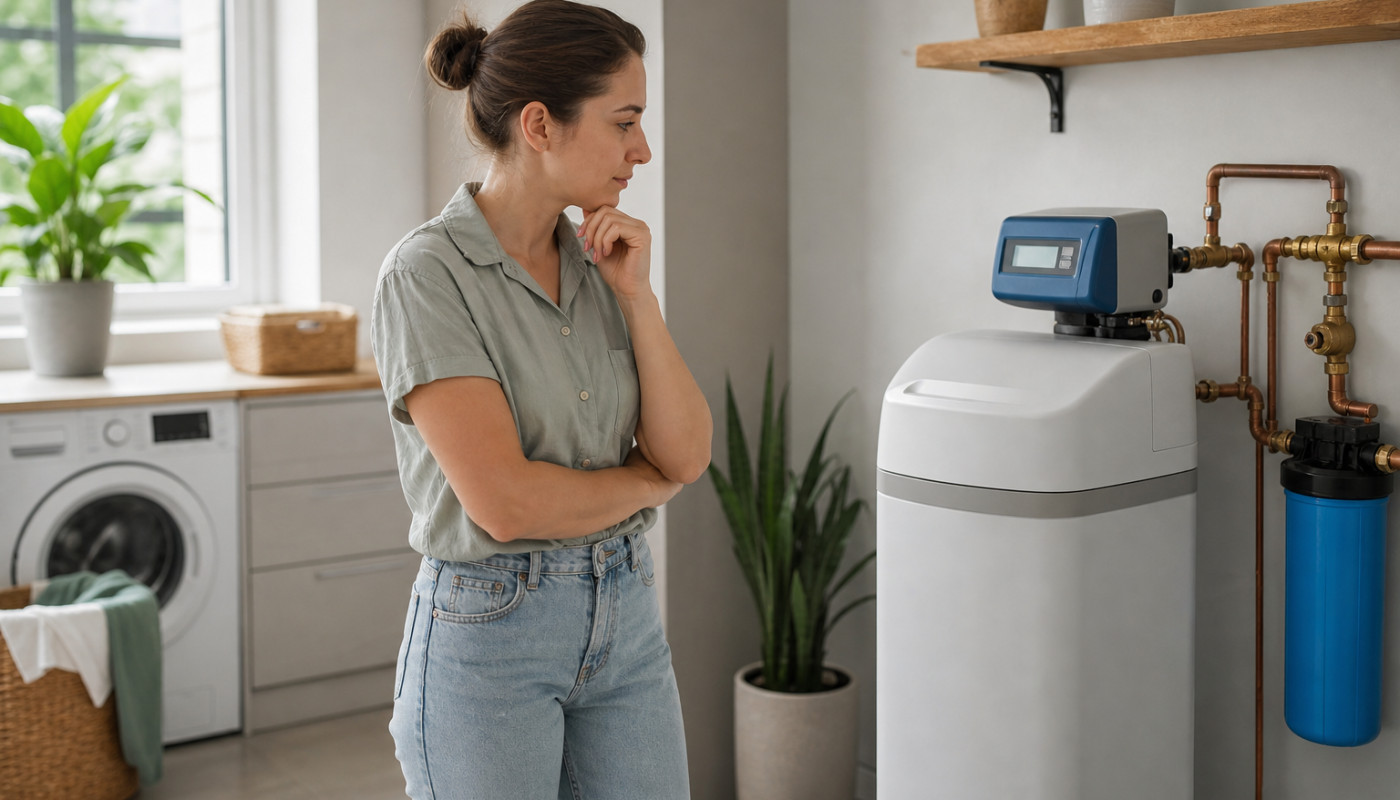
Limescale is one of those everyday problems that quietly gets expensive, especially in regions with hard tap water, where calcium and magnesium leave visible traces on fittings and invisible ones in boilers and pipes. Water softeners promise relief, but they also raise questions about costs, maintenance, health and environmental impact. With German households facing high energy prices and rising renovation costs, the question is no longer just “nice to have” but increasingly economic: does a water softener pay off, and for whom does it make sense?
Kalk kostet, oft ohne dass man es merkt
How much does limescale really cost a household? Not only the stubborn white crust on the shower head, but above all the thin layer inside heating elements and hot-water appliances. Hard water is usually defined by elevated concentrations of calcium and magnesium, measured in “Grad deutscher Härte” (°dH), and in Germany the spectrum ranges from very soft in some regions to clearly hard in others, depending on local geology and waterworks blending. The practical consequence is simple: the harder the water, the faster scale forms where water is heated, and that is where efficiency losses start to matter financially.
Even small deposits can worsen heat transfer, which means appliances need more electricity or gas to deliver the same temperature. That effect is well documented in technical literature on heat exchangers and household appliances, and manufacturers of boilers and water heaters routinely warn about scale-related performance decline. In day-to-day terms, it shows up as longer heating times for kettles, earlier failure of coffee machines, noisy water heaters and, in the worst case, expensive repairs to boilers and circulation pumps. Add to that the “hidden” spending on detergents, descaling agents and frequent replacement of taps, aerators or shower heads, and the bill grows gradually, but steadily.
For many households, the biggest economic lever is not the shiny bathroom surface, but the lifespan and efficiency of hot-water systems. Replacing a heating element, a circulation pump or a clogged valve is rarely cheap, especially when labor costs are included, and in older buildings with narrow pipes, deposits can also reduce flow and contribute to uneven water distribution. Softening does not solve every plumbing issue, yet it can reduce one major stressor: mineral precipitation. If you live in a hard-water area and heat a lot of water, the calculation becomes more compelling than many assume at first glance.
Was ein Enthärter im Haus tatsächlich verändert
A water softener changes water chemistry in a very specific way: in most residential systems it uses ion exchange, replacing calcium and magnesium ions with sodium ions. The result is “soft” water that forms far less limescale. That brings immediate, noticeable changes, for better and sometimes for worse, depending on expectations. Showers feel different because soaps and shampoos foam more easily, glass surfaces stay clearer longer and cleaning becomes less labor-intensive. Many households also report needing less detergent, because surfactants work more efficiently in soft water, and washing machines tend to have fewer scale-related issues.
The benefits are most tangible in hot-water appliances: kettles, espresso machines, dishwashers, combi boilers and storage water heaters. Less scale means fewer descaling cycles, more stable heating performance and less wear on components exposed to heat. It can also reduce the risk of malfunction in thermostatic mixing valves, where deposits may interfere with precision. In a broader home context, soft water can contribute to a more consistent water pressure in installations that would otherwise narrow over time due to scaling, although pipe material and existing condition remain decisive factors.
But softening is not “free water”: the system requires regeneration with salt, which consumes water and produces brine that goes into the wastewater system. Depending on local regulations and wastewater tariffs, that can be a relevant point, particularly in municipalities attentive to chloride loads. There is also maintenance: regular salt refills, periodic hygiene checks and, depending on the model, servicing of valves and resin. A serious installation also needs a bypass, a drain connection and usually a prefilter. In other words, the effect is real and often positive, but it comes with operational responsibilities that should be weighed as carefully as the promised comfort.
Gesundheit, Geschmack, Umwelt: die heiklen Fragen
Is softened water safe to drink? In most household systems, yes, but the nuance matters. Because ion exchange replaces calcium and magnesium with sodium, the sodium content of the water increases. For the majority of healthy adults this is not critical at normal consumption volumes, yet people on sodium-restricted diets, for example due to hypertension or kidney disease, should take this point seriously and consult medical advice if unsure. Many installations therefore keep an unsoftened drinking-water line to the kitchen tap, or use blending valves to achieve a target hardness rather than fully softening all water.
Another question is mineral intake: calcium and magnesium contribute to nutrition, although drinking water is only one source among many and dietary contributions typically dominate. Still, some consumers prefer not to reduce these minerals in their drinking water, especially when local tap water is valued for its taste and composition. Taste itself can change as well, and while many people do not notice or even prefer the smoother mouthfeel, others find softened water slightly different, particularly in tea and coffee preparation where mineral balance affects extraction and aroma.
Environmentally, the debate focuses on salt usage and wastewater. Regeneration produces saline wastewater containing chloride, and while municipal wastewater treatment plants can handle certain loads, local limits and sensitivities vary. The more water a household uses and the harder the incoming water, the higher the salt consumption. Modern systems can reduce waste through demand-controlled regeneration and optimized resin management, but they do not eliminate the basic trade-off. If environmental impact is a priority, it is worth checking whether partial softening, alternative anti-scale approaches in specific appliances, or simply targeted protection of hot-water systems could deliver a better balance for your household.
Für wen es sich rechnet, und für wen nicht
So, is it worth it? The answer depends less on marketing promises and more on three concrete variables: local water hardness, hot-water consumption and the vulnerability of your installations. In a single-person household with low hot-water use, modern appliances and only moderately hard water, the savings may be limited, and the system’s fixed costs, purchase, installation and maintenance can dominate. In contrast, families with frequent laundry and dishwashing, a large hot-water system and clearly hard water often see the benefits faster, through fewer repairs, less descaling and potentially lower energy waste in scale-prone heating elements.
Costs are not uniform. A typical residential softener involves the unit itself, professional installation, periodic salt purchases and occasional servicing; depending on building layout, additional plumbing work can be required. The economic “payback” is therefore hard to generalize: it depends on how often appliances fail without protection, how expensive local labor is and whether the household already spends heavily on descalers and detergents. A realistic approach is to treat softening as a preventive measure with comfort gains, rather than expecting an immediate, dramatic reduction in bills.
There are also cases where a full-house system is unnecessary. If scale damage mainly affects a single high-value appliance, such as an espresso machine, then localized filtration or cartridge systems may be sufficient, even if they require their own maintenance. Renters may face additional hurdles, because installation changes plumbing and needs landlord approval, and in apartments with shared water systems, individual softening may be technically complex. Owners planning a renovation or heating replacement, however, are in a strong position: integrating a softener during plumbing work is often cleaner, cheaper and better optimized than retrofitting later, and it allows for sensible choices such as keeping a separate drinking-water line unsoftened.
Pragmatischer Fahrplan für die Entscheidung
Still unsure? Start with data, not with anecdotes. Ask your local water supplier for the official hardness range, which in Germany is typically published online or available on request, and measure it at home if you want precision, because blending and building-specific factors can shift values. Then look at your own household indicators: how often do you descale, how quickly do fittings clog, does your boiler show frequent faults, and how old are your hot-water appliances? If you already replace shower heads and kettle elements regularly, you have a clear signal that hardness is not just a cosmetic issue.
Next, compare system types and features. Demand-controlled systems regenerate based on actual water use rather than fixed intervals, which can reduce salt and water consumption. Hygiene functions, resin quality and certified components matter, particularly because the system sits on the drinking-water line and must comply with German plumbing standards and the “Trinkwasserinstallation” requirements. Professional installation is not a luxury; it is essential to avoid backflow risks, stagnation zones and incorrect drainage connections. A reputable installer will also help define a target hardness rather than aiming for “as soft as possible”, because moderate softening can already cut scaling while limiting sodium increase and salt consumption.
Finally, factor in operating discipline. A softener neglected for months, with empty salt tank or no hygiene checks, is not a comfort upgrade but a potential hygiene and reliability problem. If you want low effort, check whether your household realistically keeps up with refills and servicing, or choose a model with monitoring and clear maintenance prompts. A decision rooted in real water hardness, realistic usage and willingness to maintain the system is far more likely to deliver satisfaction than one driven by a single dramatic before-and-after photo.
Was am Ende zählt: Komfort gegen laufende Pflicht
There is no universal verdict. In hard-water regions, especially for households with high hot-water use, a water softener can reduce scale stress on appliances and make cleaning noticeably easier, and that combination often justifies the investment. Where water is only moderately hard or usage is low, targeted protection may be smarter. Plan installation early, budget for salt and service, and check whether partial softening or a separate drinking-water line fits your needs.
Zum selben Thema

Solaranlagen für Einfamilienhäuser: Wichtige Informationen vor der Installation

Nachhaltige Gestaltung von Gemeinschaftsräumen in Schulen: Wie man einen ästhetischen und langlebigen Bodenbelag für Klassenzimmer, Flure und Speisesäle auswählt

Tipps zur Auswahl eines Waschbeckens für das Badezimmer

Einbau eines Spas zu Hause: Kosten, Vorschriften, Standortwahl und Tipps vor dem Kauf

Die Schritte für Ihre Renovierungsarbeiten

Wie man sein Haus im Sommer kühl hält, ohne Klimaanlage zu verwenden
Energieverbrauch durch gezielte Renovierungsarbeiten reduzieren
Poolrenovierung: So verleihen Sie Ihrem Schwimmbecken neues Leben

Renovierung des Badezimmers: Wie man den richtigen Spiegel auswählt

Regenwasser im Garten nutzen: Welche Lösungen gibt es für Ihr Zuhause?

Länger und besser zu Hause leben: Die Anpassung der eigenen vier Wände und die Organisation alltäglicher Unterstützung